
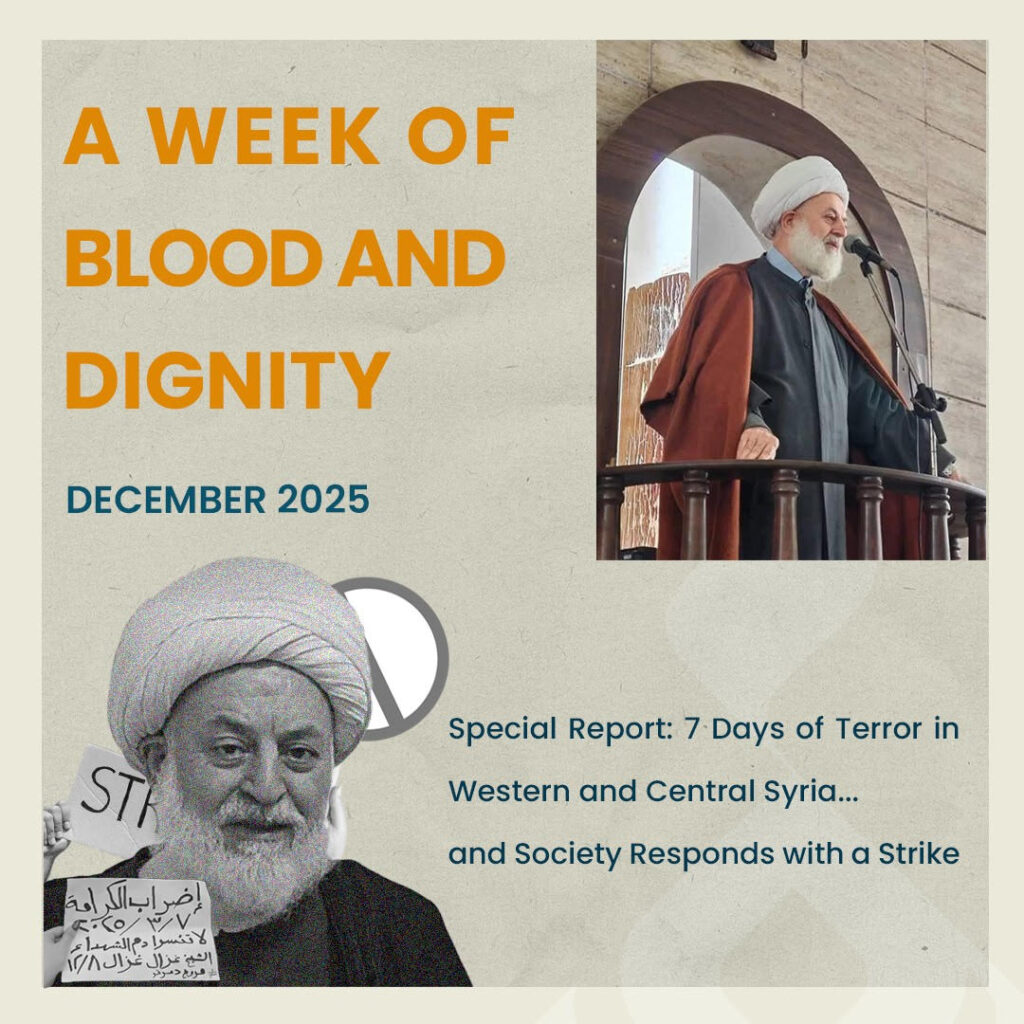
The period from December 1 to 7, 2025, has cast a stark and troubling shadow over the areas of western and central Syria. This week was marked not by a single event, but by a relentless wave of diverse security incidents—bombings, kidnappings, targeted killings, vandalism, and armed attacks—unfurling across multiple governorates. From the coast in Latakia and Tartus to the cities and countryside of Homs and Hama, a pattern of destabilization, fear, and sectarian targeting emerged, deeply impacting civilian life and social cohesion. This escalating security and social crisis has provoked a powerful, organized societal response: a call for a “Dignity Strike” by segments of the coastal community, directly linking the unrest to a defense of existence and a rejection of impunity. This report documents the alarming events of this period and analyses the emerging civil movement they have triggered.
A Chronicle of Disturbing Incidents (December 1-7, 2025)
The week presented a grim mosaic of lawlessness, violence, and symbolic aggression:
· December 1, Al-Sayyada Village (Hama): The week began with a severe sectarian violation. Members of the de facto authorities bombed the shrine of Sheikh Faraj Abu Hiyya. This attack targeted the religious and symbolic heritage of the local community, constituting a serious escalation in the pattern of assaults on spiritual sites.
· December 2, Jableh: The young man Hazem Najdat Kanan (22) was kidnapped from the Al-Salibeh neighborhood. His sister, Ola, publicly appealed for information on his fate, highlighting the terror such disappearances inflict on families.
· December 3, Homs: The body of Yamen Khidr Hammoud (19), a delivery worker, was discovered in the Al-Dar Al-Kabira area with a gunshot wound to the head, a case of targeted violence against a civilian.
· December 4, Homs Outskirts: Mrs. Walaa Saeb Al-Assad, a mother of three from Tartus governorate, was kidnapped near the Northern Homs Garage.
· December 4, Salhab (Hama): Sheikh Issa Al-Khair was arrested from his home without announced charges, leading to local appeals for his release.
· December 5, Latakia: The body of young woman Shaza Jameel Mohammed was found at a crime scene in the Al-Da’dour neighborhood.
· December 5, Tartus Countryside: Several Alawite religious shrines, including those of Sheikhs Hamed Zaghbour, Mohammed Al-Ajami, and Youssef Al-Raddad, were burned and vandalized, amplifying the campaign against religious symbols.
· December 6, Baniyas: A large fire broke out in Al-Asibah village, with residents calling for urgent assistance to contain it.
· December 7, Homs: The city witnessed two separate attacks. In Al-Sabeel neighborhood, unidentified gunmen on a motorcycle threw a hand grenade, burning a car. Hours later, in Al-Nazihin neighborhood, Tarek Al-Saleem (22) and his sister Maya Al-Saleem (19) were injured by gunfire from unknown assailants.
This relentless sequence unfolded against the backdrop of an ongoing hunger strike by detainees in Homs Central Prison, with journalist Waheed Yazbek drawing attention to their deteriorating conditions—a reminder of the chronic human rights crises persisting in the region.
Societal Response: The “Dignity Strike” and Official Pressure
In direct response to this wave of violence, particularly the stark sectarian targeting of shrines—beginning with Sheikh Faraj Abu Hiyya’s on December 1st—and the general climate of insecurity, a significant civil movement has crystallized. Under the slogan “Because our people’s blood is not for sale or bargaining,” a coalition led by figures such as Sheikh Ghazal Ghazal and supported by widespread appeals from within the Alawite community has called for a general “Dignity Strike.”
Scheduled from December 8 to 12, 2025, this strike is framed as a non-violent, collective duty to “protect dignity and existence” and a firm rejection of sectarian violence against civilians. It represents a profound expression of popular discontent and a quest for safety and accountability.
However, reports from activists indicate that the de facto authorities have met this civic mobilization with pressure and threats. According to these sources, public sector employees have been threatened with dismissal if they participate in the strike. This tactic mirrors previous punitive measures, such as the reported transfer of Tartus port workers to remote areas following protest movements in October 2025—a move those workers protested with a sit-in on December 2.
Conclusion: A Critical Juncture
The first week of December 2025 exposes a critical and deteriorating situation in western and central Syria. The state appears unable or unwilling to provide consistent security, halt a troubling pattern of kidnappings and assassinations, or protect religious sites from targeted attacks. In the vacuum of official protection and accountability, a grassroots movement for dignity has emerged, employing the tool of a general strike as a direct answer to the week’s events.
The confrontation is no longer solely between armed entities but is increasingly defined by a struggle between a population desperate for stability, rights, and the preservation of its heritage, and authorities relying on coercion to manage dissent. The international community and humanitarian organizations must closely monitor both the escalating security incidents—including the targeting of religious sites—and the response to this peaceful civil action. The coming days will test whether civic protest can carve out space for dialogue and reform, or if it will be met with further suppression, potentially fueling greater instability in a region weary of conflict.