
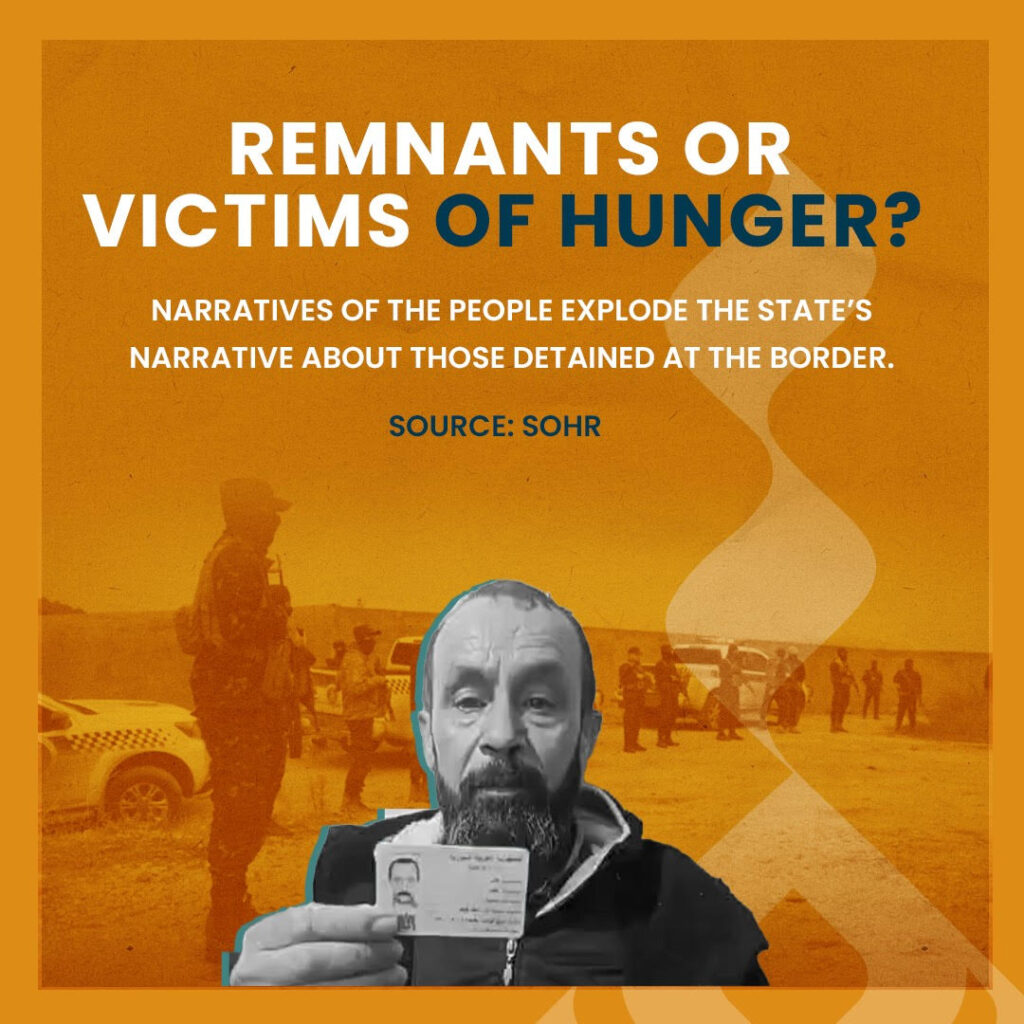
Matching testimonies from families of a number of individuals detained by the authorities on the Syrian-Lebanese border, whom the state officially described as “remnants and officers,” indicate that the majority of the detainees are poor civilians who attempted to cross into Lebanon via irregular routes, fleeing poverty and starvation in search of work opportunities.
Among these individuals are the following names:
Ali Salman – Civilian
Jaafar Ahmed – Civilian
Imad Ahmed – Former Army Sergeant
Badran Suleiman – Civilian
Riyad Ibrahim – Civilian
The Media and Communications Administration of the Ministry of Defense had stated to the Syrian News Channel that border guard units had arrested 12 people, including elements and officers linked to the former regime, on the Syrian-Lebanese border. This statement was published on most government websites, coinciding with the terrorist bombing that occurred in Homs, in a context of media exploitation that serves the government’s agenda.
The families point out that these individuals left more than ten days ago for Lebanon to work there due to extreme poverty, before communication with them was cut off. It is not yet known whether they were arrested since that time and the news was recirculated today to reduce media focus on targeting members of the community in several areas, most notably the bombing of the mosque in the Wadi al-Dhahab neighborhood in Homs—the most likely possibility—or whether their detention occurred while they were attempting to return to Syria.
The Syrian-Lebanese border is witnessing widespread chaos, as most Syrian workers enter and exit through unofficial crossings to escape the strict official requirements, such as prior approval, sponsorship, and financial amounts, which forces many to resort to smuggling as a forced choice to survive and work.
Available information to the Observatory also indicates that the majority of IDs shown in the filmed footage are civilian IDs, while only two military IDs were found, in addition to a military service booklet which does not necessarily mean its holder is an active military member.
The families confirmed that some of the detainees were receiving monthly aid to support their children and are classified among the poorest recorded living conditions.
This clarification comes in the context of correcting inaccurate information circulating about the identity of the detainees, while emphasizing that their description as “remnants” is a description issued by the state, whereas the Observatory relays the testimonies and accounts of the families, which confirm that most of them are poor civilians with no connection to any military activity.