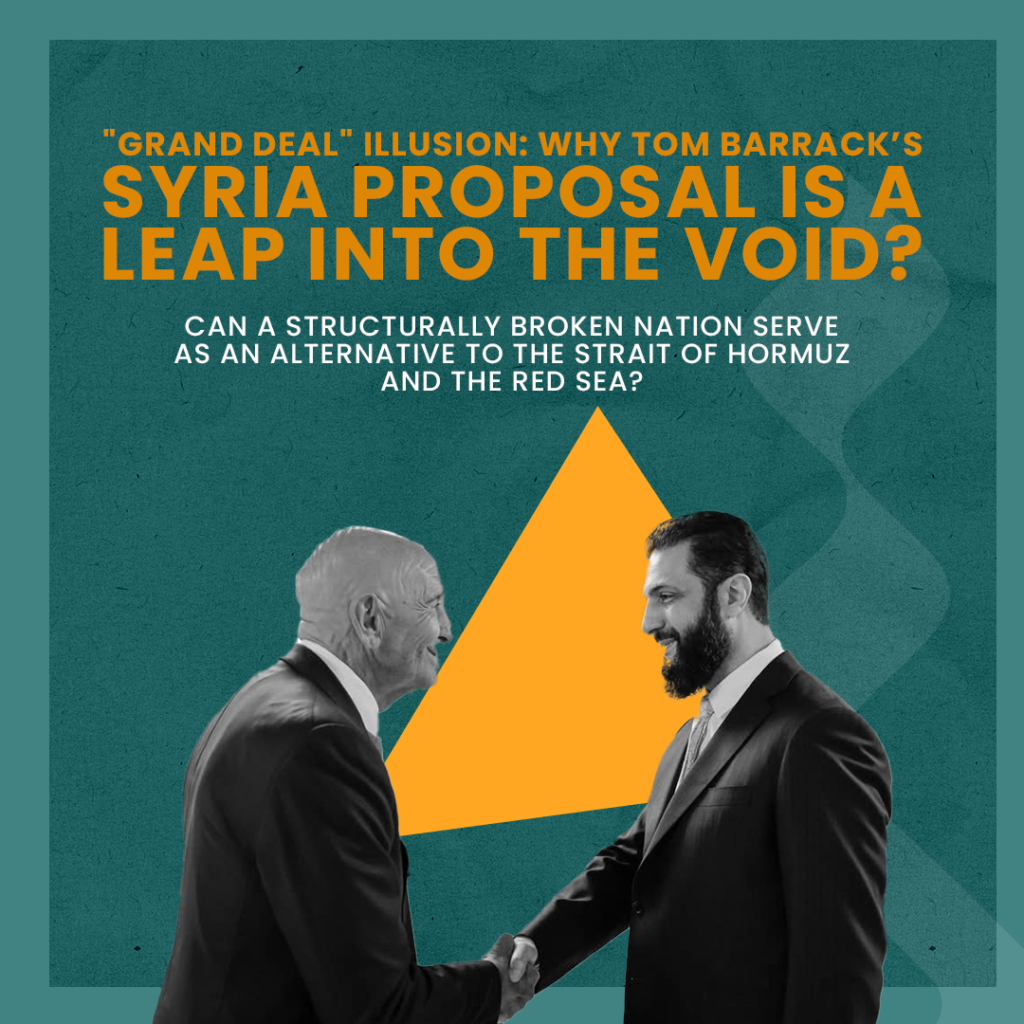
The recent proposal put forward by businessman Tom Barrack regarding Syria’s energy sector is not merely a weak idea; it is a proposition that lacks the most basic elements of strategic seriousness. In what can only be described as a “leap into the void,” Barrack treats a shattered nation not as a complex geopolitical crisis, but as a distressed asset—a quick investment opportunity for a high-stakes deal-maker.
1. Building on Ruins: The Infrastructure Trap
At the heart of Barrack’s proposal is a profound denial of physical and sovereign reality. To suggest a multi-billion dollar energy corridor through a country with shattered infrastructure is more than just bold—it is delusional. Syria’s national grid, processing plants, and pumping stations have been reduced to rubble or rendered obsolete by years of conflict.
Pipelines are the most sensitive and vulnerable forms of infrastructure; they require a stable sovereign environment and a functional technical base. Attempting to install high-tech energy corridors over a landscape of ruined pipes and fragmented power grids ignores the basic hierarchy of strategic stability. You cannot build a modern energy hub on a foundation of physical and institutional disintegration.
2. Geopolitical Blindness
Furthermore, the proposal suffers from “geopolitical blindness.” Any pipeline route carved through Syrian territory would immediately become a primary battlefield for conflicting interests. The agendas of regional actors—Turkey, Kurdish forces, Israel, and others—are in direct opposition.
The “Trump-style” logic of deal-making—relying on personal rapport and economic incentives—might generate media noise, but it cannot produce sustainable settlements in a landscape defined by existential conflicts. One cannot build a bridge of glass over a volcanic eruption, nor a pipeline through a crossfire of competing militias.
3. Oversimplification of Strategic Progression
Barrack’s vision skips over the essential stages of state-building. By treating Syria as a “shortcut” to bypass the Strait of Hormuz, he ignores the fact that a route is only as safe as the ground it sits on.
Proposing such a project in the current context—where the energy sector’s technical backbone is broken and human capital has fled—is a gross oversimplification. Syria is currently a political and industrial vacuum; attempting to fill that vacuum with oil pumps without a comprehensive political solution and massive reconstruction of basic utilities is a technical illusion that ignores the ongoing human and political catastrophe.
Conclusion: Noise vs. Stability
In conclusion, while the window for investment may be “open” in the eyes of a venture capitalist, it remains slammed shut by the realities of war, sanctions, and infrastructure collapse. Economic MoUs cannot replace sovereign security or repair a destroyed industrial base. Until Syria achieves internal cohesion and legitimate governance, any talk of it becoming a regional energy hub is not an “opportunity in numbers”—it is a dangerous fantasy.
News
March 27, 2026
The “Deal-Maker” Delusion: Why Tom Barrack’s Syria Energy Proposal is Strategically Bankrupt