
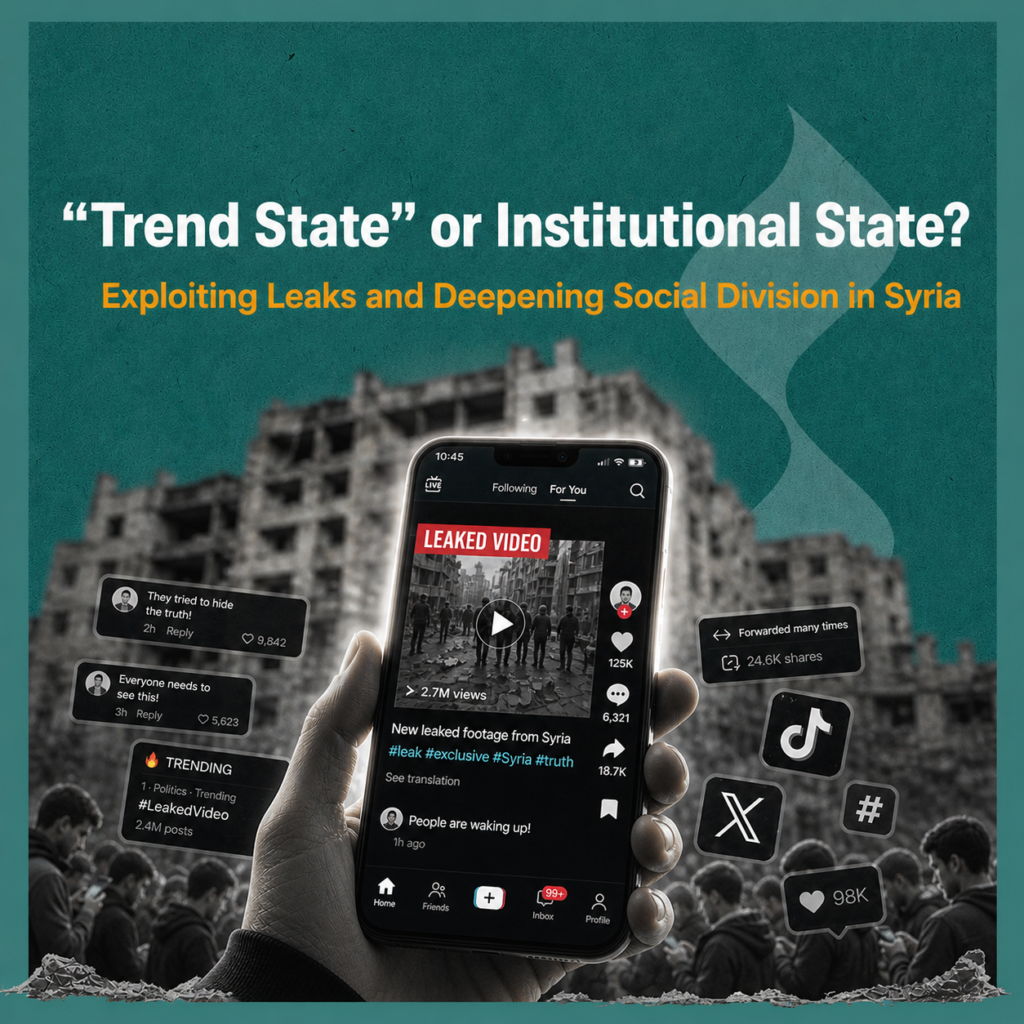
In an analytical reading of the rapidly evolving Syrian landscape, Rami Abdel Rahman, Director of the Syrian Observatory for Human Rights (SOHR), warned of the danger of falling for orchestrated media waves targeting the Syrian social fabric. He considered the method of crisis management through “leaks” as a reflection of the authority’s failure to transition into a true state for all its citizens.
Political Exploitation of Dialect and Sect
Rami Abdel Rahman pointed out that highlighting the “accent of members of the Alawite sect” in recently circulated videos is not a spontaneous act. Rather, it is a tactic closely resembling the use of the “Luna Al-Shibl” tapes, which were previously held by security authorities.
Observers believe that this type of content is injected at specific timings to achieve clear political objectives, including:
-
Distracting attention from core issues and livelihood demands.
-
Confining the conflict within a narrow sectarian framework instead of its political and human rights context.
-
Recycling “trends” to ensure the public remains in a state of continuous digital confusion.
Justice vs. Incitement
The Director of the Syrian Observatory emphasized a firm principle: “No one is against the trial of those who killed the Syrian people,” stressing that accountability is the cornerstone of any future national building. However, Abdel Rahman believes that the timing of using these videos carries negative connotations, as it appears to be a tool for incitement against a specific sect rather than a step toward justice.
“The use of filmed tapes at this timing to incite against this particular sect indicates that the authority has not and will not rise to be a state for all Syrians.” — Rami Abdel Rahman.
From “State” to “Trend”
Describing Syria as having become a “Trend State” reflects a bitter reality where fateful issues are managed via social media platforms and through “leaks” instead of an independent judiciary and national institutions. This approach leads to:
-
Deepening the rift between Syrian components.
-
Undermining opportunities for genuine national reconciliation.
-
Consolidating de facto powers that thrive on social crises.
The question remains: Do Syrians realize that being drawn into these systematic “trends” only serves to maintain the status quo? The path to a future Syria begins with rejecting sectarian incitement and adhering to the principles of citizenship and comprehensive justice, away from the maneuvers of leaked tapes and manufactured identity conflicts.