
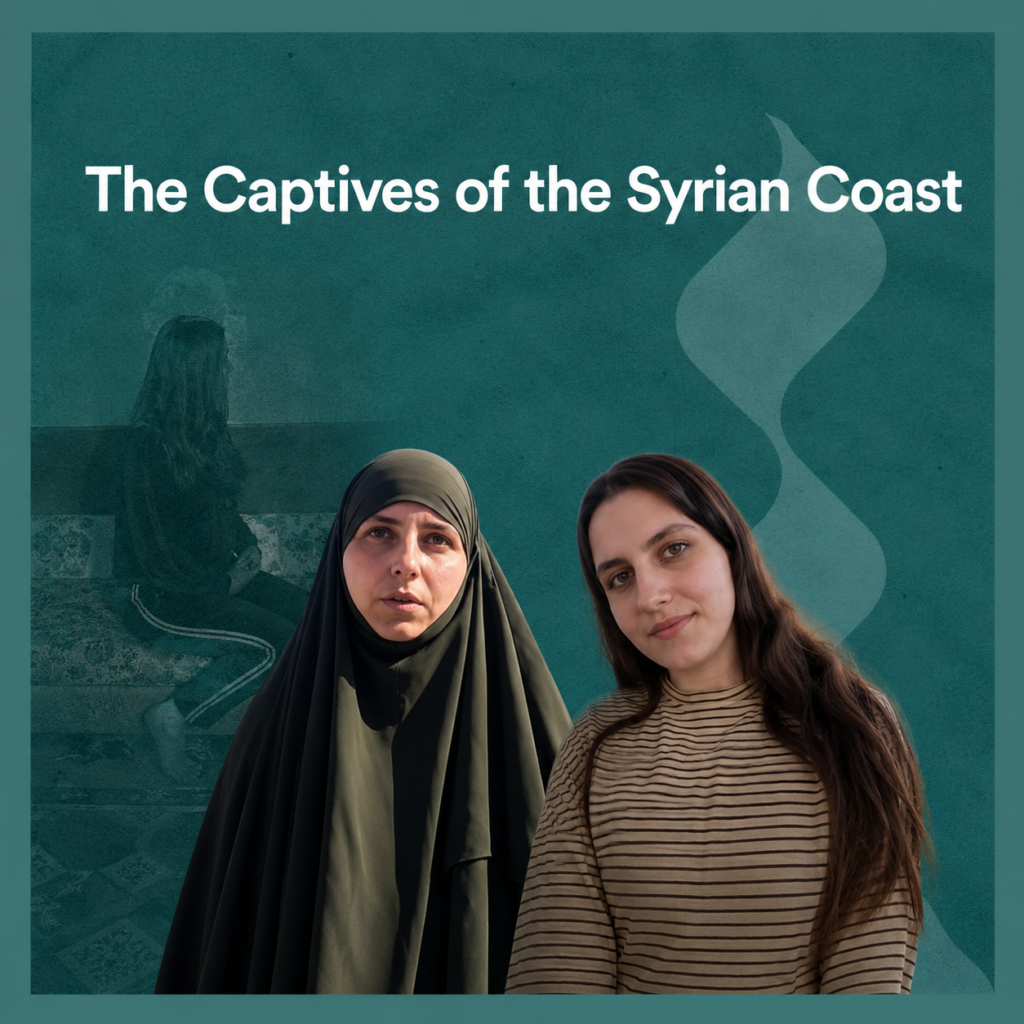
The case of university student Batoul Suleiman Alloush has surged to the forefront of events on the Syrian coast, intersecting with documentation by the international press—most notably The New York Times—regarding the phenomenon of kidnapping women and girls from the Alawite community. This incident is not merely a fleeting criminal act; rather, it reveals a complex pattern where “intellectual terrorism” intersects with “security collusion,” placing Syrian society before a grave human rights crisis that transcends traditional descriptions to reach the level of systematic “captivity” (Sabaya).
Details of the Crime: A Security Breach Inside the University Campus
In early May 2026, Batoul Alloush disappeared from inside Tishreen University in Latakia, an institution supposedly under stringent security measures. Field data, based on reports from the countrysides of Jableh and Latakia and leaked audio recordings, point to the involvement of an individual named Yusr Muhammad Khalifa in the kidnapping. Furthermore, facts confirm that surveillance camera footage at the “Industrial Gate” (Bab al-Sina’a) was deleted with the direct collusion of university security personnel, indicating that the operation was organized and institutionally covered.
Within the framework of intimidation psychology, the student later appeared in a video recording wearing a full face and body covering, claiming she had “converted to Islam” of her own free will. However, the Alloush family categorically denied this, emphasizing that her body language and tone of voice reflected a state of psychological shock and Post-Traumatic Stress Disorder (PTSD). This aligns with foreign reports describing such clips as “confessions under duress.”
Family Testimony: Behind the Scenes of the Meeting at Criminal Security
In a dramatic development documented by the filmed testimonies of her father, Suleiman Alloush, the parents met their daughter inside the Criminal Security branch in Jableh. According to this testimony, the meeting was akin to a “security play,” conducted in the presence of security personnel, lawyers, and cameras, which prevented the girl from speaking freely. The family’s account reveals they were subjected to direct blackmail; authorities pressured them to record a video denying the kidnapping in exchange for false promises to hand over their daughter on Sunday, May 10, 2026. After the authorities reneged on their promises, the parents published a video confirming that their daughter is being held as a “captive” (Sabiya) by those they described as the “Emirs of Jableh,” noting that they had received direct threats targeting their younger daughter at home.
General Context and the Religious Cover for the Kidnapping
The case of Batoul Alloush comes as a continuation of what the international press has documented regarding the “politicization of the female body” in the Syrian conflict, where forcing girls to change their beliefs is used as a tool to break community symbolism. In this regard, a statement issued by the “Supreme Alawite Islamic Council” in May 2026 confirmed that this incident constitutes a link in a chain of systematic targeting, calling for the formation of an international investigation committee to classify these acts as “crimes against humanity.”
The “theological” cover for the crime emerges in this context through fatwas by extremist figures, such as Abdul Razzaq al-Mahdi, which prohibit returning the girl to her family on the pretext of her “Islam.” This provides a shroud for practices resembling modern slavery and legitimizes the kidnapping of women under a religious guise.
Legal Responsibility and the Consequences of the “Law of the Jungle”
Available data leads to holding the administration of Tishreen University and the security apparatuses in Jableh and Latakia directly responsible for providing cover for the kidnappers. Despite the victim’s appearance in a video recording, her detention and the prevention of her free communication with her family fall legally under the crimes of enforced disappearance and “captivity” under a false legal cover.
The use of weapons and threats to change beliefs or silence families represents a direct threat to civil peace. This necessitates urgent action from international organizations such as Human Rights Watch and Amnesty International to open the file of “forcibly kidnapped women” in the Syrian coast, where silence regarding this case effectively means the legalization of the “law of the jungle.”