
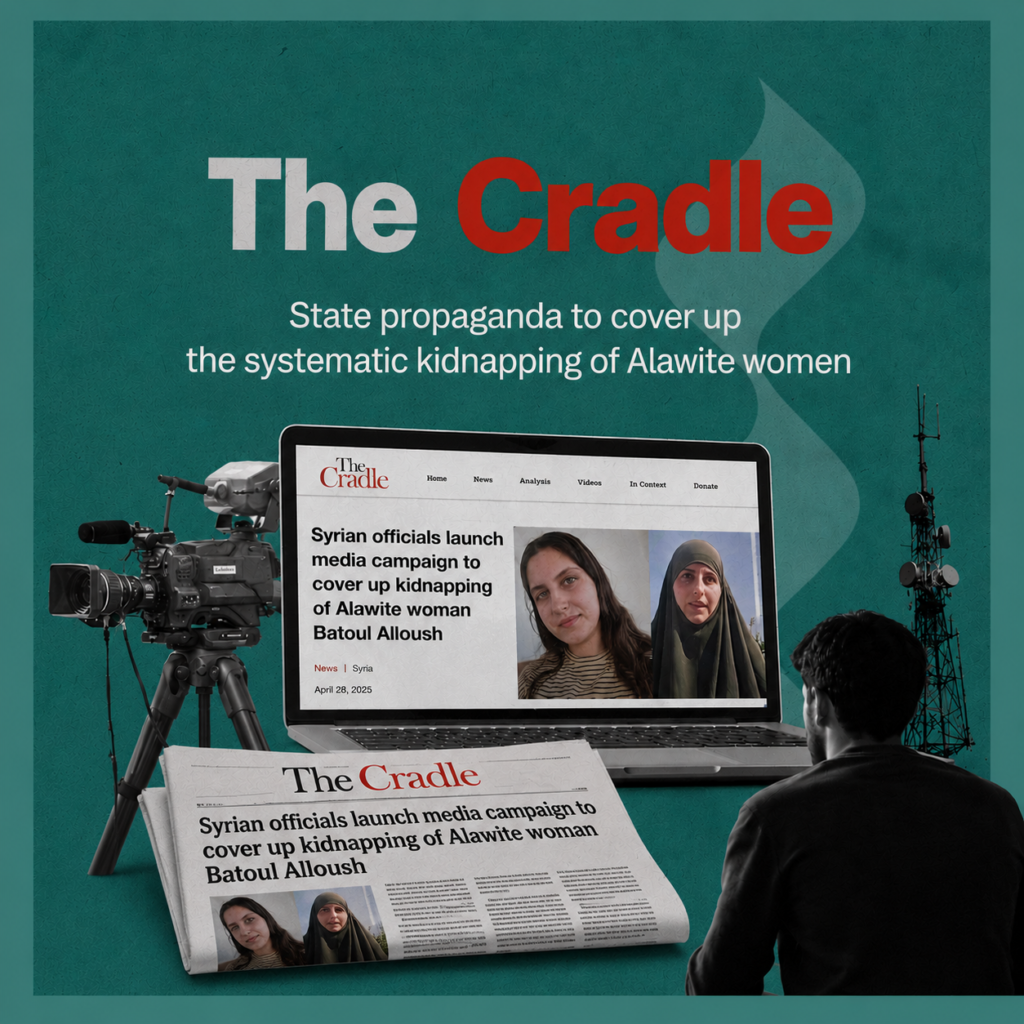
The cries of families of kidnapped Alawite women in Syria are no longer confined within four walls or limited to hesitant Facebook posts. The issue has evolved into a high-stakes international file, placing the current Syrian government—which came to power over a year ago with an extremist background—in direct confrontation with the international community and human rights organizations.
Official Cover-up Attempts: The “Apostasy” Narrative to Justify Enforced Disappearance
The case of Batoul Alloush, a 20-year-old student at Tishreen University, has become the primary example of what international observers describe as a policy of “enforced disappearance and enslavement” targeting Alawite women. Since her disappearance on April 29th from the city of Latakia, a disinformation campaign led by security agencies and local officials has surfaced to cover up an organized kidnapping. Reports from international outlets, including The Cradle, indicate that authorities in Jableh and Latakia did not only ignore the family’s reports but also applied pressure to promote a narrative of “voluntary migration” and “religious conversion”—a pattern now repeated in dozens of similar cases.
Government Propaganda: Dawn Interrogations and Forced Confessions
Human rights advocates argue that videos showing kidnapped women, including Batoul, denying their abduction are nothing more than “confessions under duress.” In a bizarre press conference held at a suspicious time (3:00 AM), Batoul appeared surrounded by security officials and pro-government journalists to give a testimony that her father described as lifeless and devoid of will. These scenes evoke the methods used by extremist groups in managing “captive” files.
Documented Official Procedures in the Detention File:
-
Preventing the family from being alone with their daughter at the place of detention.
-
Interference by influential security figures, such as “Sheikh Salah al-Din,” in managing the file.
-
Issuing religious fatwas from clerics close to the authorities to legitimize the detention of girls under the name of “The Sisters’ House.”
Human Rights Record: International Evidence Condemns the Kidnapping Network
These are no longer isolated incidents. Amnesty International, the United Nations, and global news agencies like Reuters have documented dozens of cases confirming that the Syrian coast and interior have become theaters for the kidnapping, rape, and enslavement of women on a sectarian basis. Political analysts suggest that the ideology adopted by the current authorities—derived from extremist historical fatwas (such as those by Ibn Taymiyyah against Alawites)—is the primary driver behind these violations, making the government not only complicit but a sponsor of these crimes.
Expanding Reports and Human Rights Pressures
Despite the threats, the bravery of Batoul’s mother, Rua, has encouraged other families to break their silence, such as the families of Mariam Faiz Sultan and Rua Yamen Ismail. These grassroots movements, backed by international media coverage, have begun to tighten the noose around the Syrian government’s attempts to polish its image before the international community.
The Batoul Alloush case transcends being a mere criminal disappearance; it has become a political and legal indictment documenting the use of “women” as tools in sectarian and political score-settling, amid rising international demands to hold Syrian authorities accountable for “enslavement” practices documented in UN reports.