
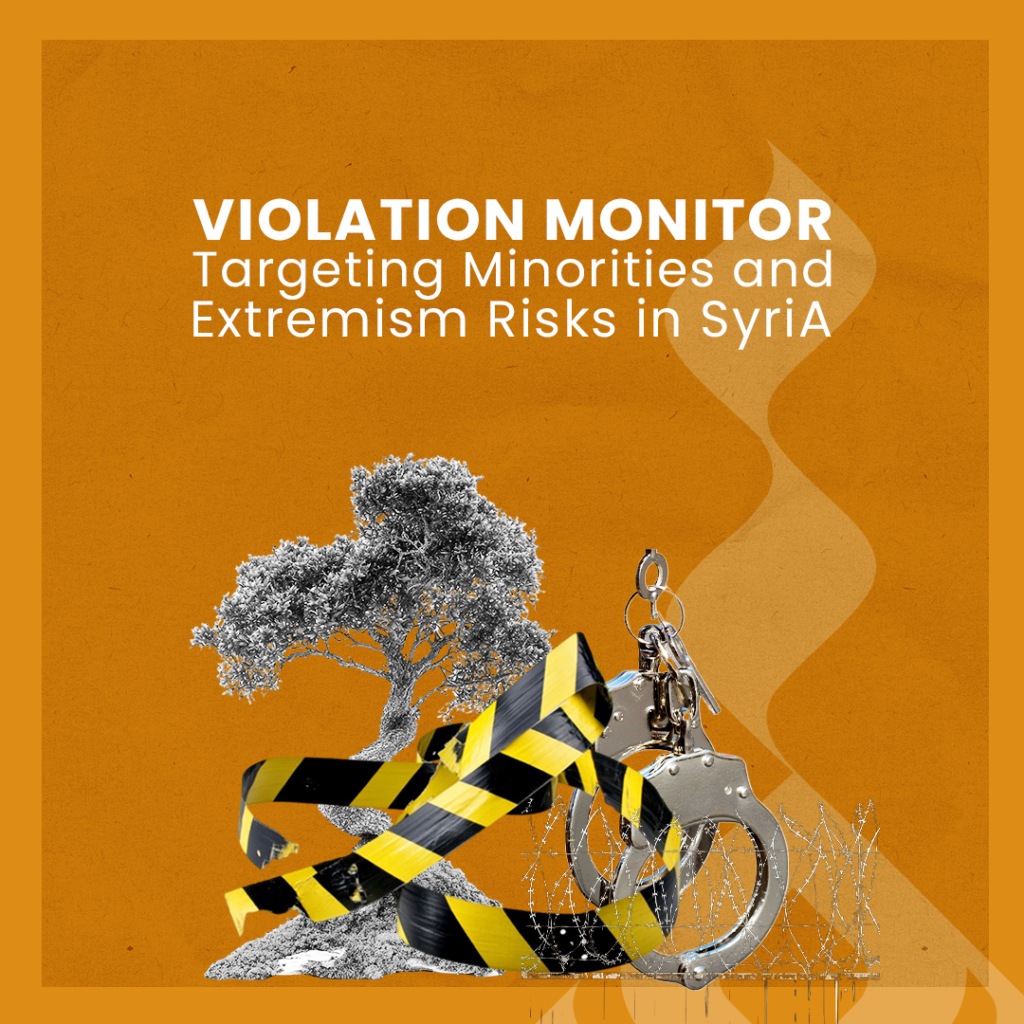
The recent political and security shifts in Syria have created a volatile vacuum, where the struggle for civil rights is increasingly overshadowed by targeted sectarian aggression, systematic extortion, and a looming regional security crisis.
The Systematic Targeting of the Alawite Community
Alawite-majority areas are witnessing a dangerous escalation that has evolved from isolated incidents into a systematic policy of financial and psychological attrition. In the village of Al-Alamin (Hama countryside), “General Security” gangs have imposed exorbitant sums—reaching millions of Syrian pounds per family—as “Jizya” or protection money. Widows and the impoverished are not exempt, facing the immediate threat of forced displacement if they fail to pay.
In Homs, the assassination of Wasim Al-Ashqar in the Al-Sabil neighborhood was the brutal execution of prior public sectarian threats made by individuals residing abroad, highlighting the existence of hit lists operating under security cover. Meanwhile, in Damascus, selective law enforcement in Hay Al-Woroud continues to target Alawite youths exclusively during local disputes. In Tartus, the mysterious death of Engineer Hazem Zaghbour sends a chilling message to the community’s professional elite. Together, these events point toward a “silent cleansing” intended to drive the community toward forced migration through state-sponsored intimidation.
Religious Intolerance in Qatana
The Christian community in Rif Dimashq is also facing a disturbing rise in provocation. In the city of Qatana, activists documented groups chanting offensive slogans directly in front of the Syriac Catholic Church of Our Lady of Salvation. This direct harassment of faith symbols mirrors incidents recorded in other regions, heightening fears among Christian minorities that the social fabric of coexistence is being deliberately dismantled.
Civil Resistance: The Suwayda Movement
Despite the surrounding chaos, a steadfast civil movement continues to demand dignity in southern Syria. On February 14, 2026, hundreds gathered at the Roman Theater in Shahba (Suwayda) to assert their right to self-determination. The protesters emphasized that opening a “Safe Passage” to secure livelihoods is a non-negotiable right. Their demands remain clear: sovereignty, independence of decision-making, and the unconditional release of all detainees.
The Al-Hawl Breach and the Resurgence of ISIS
Compounding these internal tensions is a massive security failure at Al-Hawl camp in northeast Syria. Following the government takeover of the facility, the foreigners’ annexe was abruptly emptied. Approximately 6,000 individuals—from 42 different nationalities and linked to IS families—fled toward Idlib and the Turkish border without any security oversight.
International observers and rights groups have raised the alarm, warning that this disorganized exodus provides a critical opportunity for IS to reconstitute its networks. Furthermore, the lack of protection measures leaves thousands of women and children vulnerable to human trafficking or forced recruitment by extremist factions operating in conflict zones.
Conclusion: A Call for International Accountability
Syria is witnessing a total breakdown of legal accountability, fueling both sectarian violence and the potential return of extremist terror. The international community and human rights organizations must intervene immediately to:
1. Provide international protection for minorities against systematic displacement.
2. Activate accountability mechanisms to hold perpetrators of sectarian crimes responsible.
3. Secure dignified repatriation or protection paths for those caught in the Al-Hawl crisis to prevent a resurgence of extremism.