
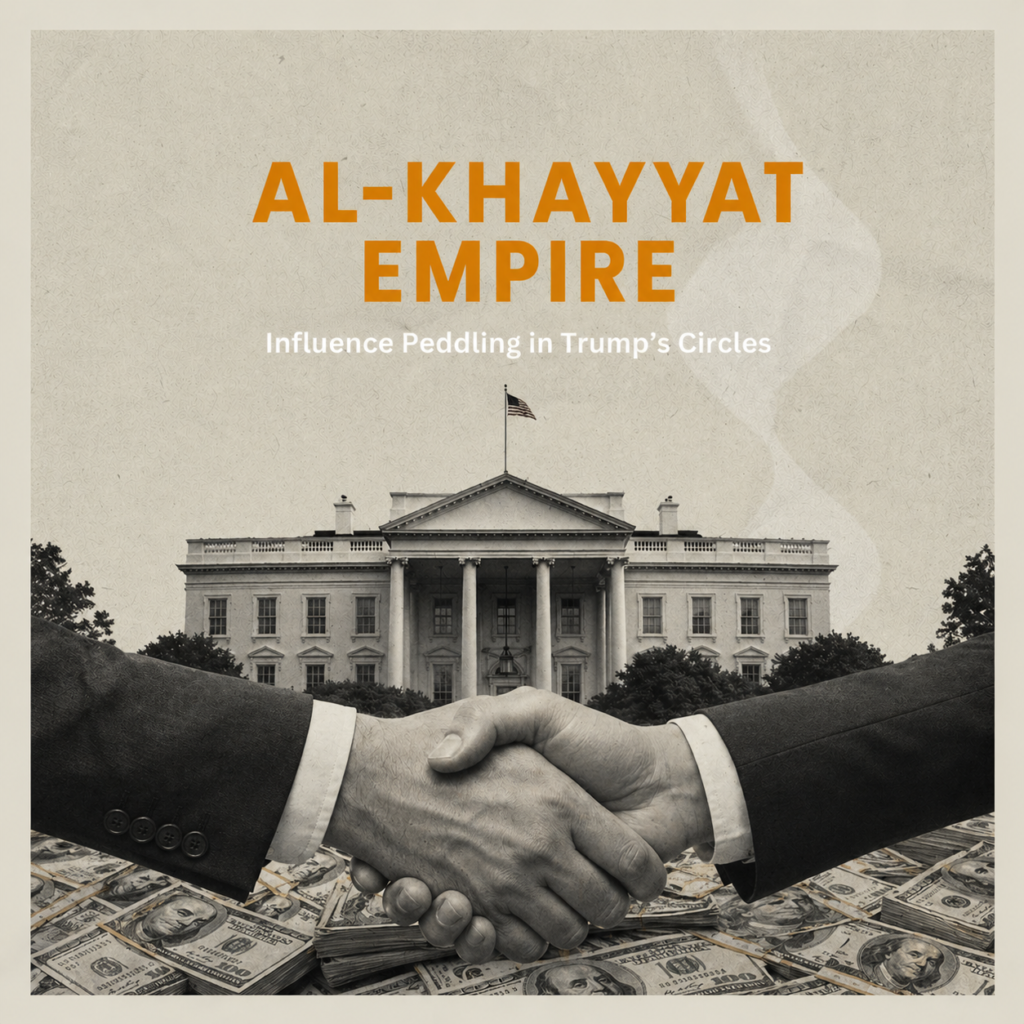
The web of interests woven by the Al-Khayyat family—one of Syria’s prominent business dynasties—has taken center stage in Washington’s political scene, signaling a surging influence within the inner circles of President Donald Trump. This ascent unveils a systematic strategy by Syrian “financial elites” to reposition themselves globally through high-stakes real estate investments, tethering their commercial interests to the gears of foreign policy.
Mar-a-Lago: The Gateway to Washington
For the Al-Khayyat family, owners of a cross-border economic empire, the vision has long been clear: protecting their investments in Syria and the region requires a “hotline” to the heart of decision-making in the White House. This ambition has materialized through intensive engagement with the President’s son-in-law, Jared Kushner, and his daughter, Ivanka Trump, via massive investment partnerships—most notably a luxury tourism and real estate project in Albania valued at over $3 billion.
This entanglement of “business” and politics places the Syrian file before new challenges. These partnerships are increasingly viewed as an attempt to legitimize the influence of Syrian economic figures, providing them with international cover that shields them from regulatory scrutiny or the repercussions of standing sanctions.
Golf Courses for Political Standing
The “Trump Brand” serves as a pivotal tool of influence for the Syrian family. The strategy extends beyond mere financial investment; it aims to bind their names to Trump-branded projects, granting these investments a moral and political immunity against any future pressures.
While traditional political solutions for the Syrian crisis remain stalled, “real estate solutions” are moving rapidly behind closed doors. Concerns are mounting over how these financial maneuvers might sway U.S. foreign policy, particularly regarding “reconstruction” files and engagement with the powers on the ground.
The Gap Between Human Rights Discourse and the Reality of Deals
These developments coincide with intensified international pressure to document violations and ensure that figures linked to military financing do not escape accountability. However, the reality on the ground reveals a widening chasm between this human rights discourse and the clamor of major deals being struck between Washington, Dubai, and Albania.
The current influence strategy centers on several key pillars:
-
Political Investment: Utilizing real estate projects in Eastern Europe as a bridge to decision-makers within the Republican Party.
-
Reputational Recycling: The effort by Syrian business families to “wash” their international reputations by engaging in global tourism and entertainment ventures.
-
Conflicts of Interest: The legal risks surrounding the intersection of the President’s family’s private investments and sovereign decisions regarding the Middle East.
“Real Estate Pragmatism” and the Future of Accountability
These intertwined relationships are forging a new reality in Syria, one where businessmen hold the upper hand in drawing the political map to suit their private commercial interests. This path poses an existential challenge to accountability and legal documentation efforts, as human rights causes find themselves up against the force of “billion-dollar diplomacy”—a reality that bypasses traditional diplomatic channels.