
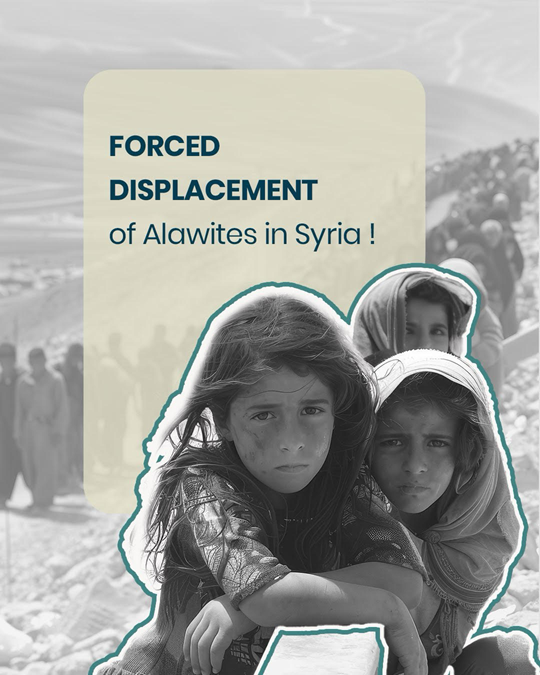
A coordinated campaign of intimidation and forced displacement is targeting Alawite communities across western Syria, with thousands of families fleeing their homes amid threats of sectarian violence and systematic persecution.
The Syrian Observatory for Human Rights has documented a dramatic escalation in anti-Alawite violence since the beginning of August 2025, with reports of coordinated attacks, property destruction, and explicit threats designed to force the minority community from areas they have inhabited for generations.
Systematic Nature of the Campaign
The displacement campaign follows a predictable pattern across multiple governorates:
### Phase 1: Intimidation
Alawite families receive anonymous letters ordering them to leave within specified timeframes. These letters often contain explicit sectarian language and threats against family members, particularly women and children.
### Phase 2: Economic Pressure
Alawite-owned businesses face systematic boycotts and harassment. Shop owners report being told their businesses are no longer welcome, while employees are pressured to quit jobs with Alawite employers.
### Phase 3: Property Attacks
Homes and businesses are vandalized with sectarian graffiti. Windows are broken, doors are marked with threatening symbols, and in some cases, properties are damaged by small explosive devices.
### Phase 4: Physical Threats
Direct confrontations escalate to physical violence. Families report being stopped at checkpoints and threatened, while some have been physically assaulted in their neighborhoods.
### Phase 5: Forced Evacuation
Unable to withstand the pressure, families abandon their homes and flee to areas perceived as safer, often losing everything they cannot carry.
Geographic Scope
The displacement campaign has been documented across western Syria:
### Latakia Governorate
– Al-Hafa: Over 200 Alawite families have fled since August 1
– Jableh: Systematic harassment has emptied three predominantly Alawite neighborhoods
– Qadmous: 150 families evacuated following escalating threats
### Tartous Governorate
– Safita: Christian and Alawite families report coordinated intimidation
– Dreikish: Economic boycotts have forced closure of minority-owned businesses
– Mashta al-Helu: Entire Alawite quarter abandoned following violent incidents
### Homs Governorate
– Western rural areas: Mountain villages report mass exodus of Alawite residents
– Talkalakh: Cross-border displacement to Lebanon documented
Documentation of Violations
### Witness Testimonies
“They came at night and painted ‘Leave or Die’ on our door,” recounts Fatima, a mother of three from Jableh. “My children were terrified. We had no choice but to leave everything and flee.”
Ahmad, a shopkeeper from Al-Hafa, describes systematic economic warfare: “First, customers stopped coming. Then suppliers refused to deliver goods. Finally, someone threw a rock through my window with a note saying ‘Alawite dogs not welcome.’ I closed the shop the next day.”
### Physical Evidence
The Observatory has collected photographic evidence of:
– Sectarian graffiti targeting Alawites
– Damaged properties with religious symbols defaced
– Threatening letters containing explicit death threats
– Abandoned neighborhoods with signs of forced evacuation
### Economic Impact
The displacement has significant economic dimensions:
– Estimated property losses exceed $50 million
– Hundreds of businesses forced to close
– Agricultural lands abandoned during harvest season
– Local economies destabilized by sudden population loss
Humanitarian Consequences
### Displaced Population
Current estimates suggest over 15,000 Alawites have been displaced from their homes since August 1, with numbers increasing daily. Many families are:
– Living with relatives in safer areas
– Staying in temporary shelters
– Crossing into Lebanon as refugees
– Hiding their sectarian identity in new locations
### Vulnerable Groups
Particular concern exists for:
– **Elderly residents**: Unable to flee easily, some remain trapped in hostile environments
– **Mixed families**: Sunni-Alawite marriages face additional pressure and division
– **Children**: Traumatized by threats and forced to abandon schools and friends
– **Women**: Facing gender-based harassment and threats of sexual violence
### Health Impact
Medical facilities report treating displaced persons for:
– Trauma and psychological distress
– Chronic conditions exacerbated by displacement
– Malnutrition among children in temporary accommodations
– Pregnancy complications among displaced women
International Response
### UN Agencies
The UN Office for the Coordination of Humanitarian Affairs (OCHA) has expressed concern about the displacement but has limited access to affected areas for direct assistance.
### Refugee Protection
Lebanon and Turkey report increasing numbers of Syrian Alawite refugees seeking protection, straining already overwhelmed asylum systems.
### International Monitoring
Human rights organizations are documenting violations for potential future accountability proceedings, though access remains severely restricted.
Historical Context
The current displacement campaign represents the latest chapter in Syria’s sectarian crisis:
### 2011-2024: Civil War Period
During the civil war, Alawites were both perpetrators and victims of sectarian violence, with the community largely supporting the Assad regime for protection.
### December 2024: Regime Change
The fall of Assad’s government removed the protective umbrella that had shielded Alawite communities for decades.
### 2025: Revenge Cycle
Current violence reflects accumulated grievances from the civil war period, with some viewing collective punishment as justified revenge.
Legal Analysis
The systematic displacement of Alawites violates multiple principles of international law:
### Forced Displacement
The coordinated nature of the campaign constitutes forced displacement prohibited under:
– Geneva Convention IV
– Additional Protocol II
– Customary international humanitarian law
### Persecution
Targeting individuals based solely on religious identity constitutes persecution under international criminal law.
### Collective Punishment
Holding all Alawites responsible for regime crimes violates the prohibition on collective punishment.
Recommendations
### Immediate Actions
1. International humanitarian access to affected areas
2. Protection mechanisms for threatened communities
3. Documentation of violations for accountability
4. Emergency assistance for displaced families
### Medium-term Measures
1. Transitional justice mechanisms addressing grievances
2. Security guarantees for returning families
3. Property restitution frameworks
4. Reconciliation programs between communities
### Long-term Solutions
1. Constitutional protections for minority rights
2. Truth and reconciliation processes
3. Economic reconstruction benefiting all communities
4. Education programs promoting tolerance
Conclusion
The systematic displacement of Syria’s Alawite community represents a humanitarian crisis that demands immediate international attention. While legitimate grievances exist regarding the Assad period, collective punishment violates fundamental principles of justice and human rights.
The international community must act swiftly to prevent the complete elimination of Syria’s pluralistic character. Every day of inaction enables further displacement and brings Syria closer to becoming a mono-sectarian state built on the ruins of its historic diversity.
The displacement of Alawites today may be followed by persecution of other minorities tomorrow. Only through immediate intervention and long-term commitment to justice and reconciliation can Syria hope to break the cycle of sectarian violence that has plagued the country for over a decade.