
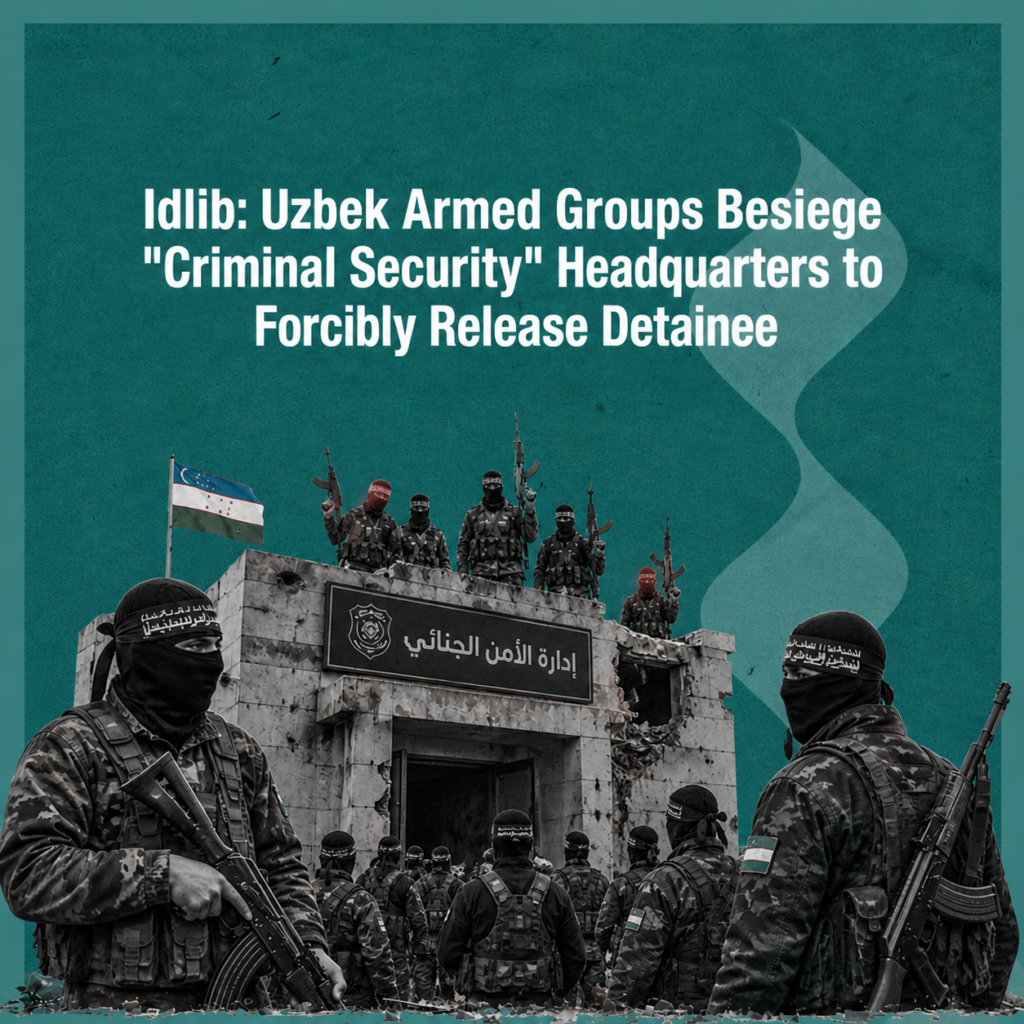
Armed groups of Uzbek nationality, affiliated with one of the factions under “Hay’at Tahrir al-Sham” (HTS), have imposed a military siege on the so-called “Criminal Security” building in Idlib city. This action aims to forcibly extract one of the faction’s members following his arrest by the aforementioned agency.
Incident Details
The field tension emerged after the “Criminal Security” apparatus detained an Uzbek member following a dispute with the agency in the town of Kafriya, rural Idlib. In response, the armed faction mobilized its cadres and surrounded the security headquarters, threatening direct military escalation and a raid on the building unless their member was released immediately.
Security Implications
This siege reflects the ongoing conflict between military wings and executive agencies in the region, highlighting several key points:
-
De Facto Policy: Reliance on military mobilization as a means of pressure, effectively marginalizing any presumed institutional procedures.
-
Fragility of the Security Framework: The incident demonstrates the weakness of executive agencies in the face of armed factions’ influence and their ability to paralyze public facilities when interests clash.
-
Fragmentation of Authority: This move reinforces the perception of rising influence among armed groups that operate as independent entities above any central authority.
Field Reality
This development underscores the prevailing state of security chaos in the region and clearly reveals the incapacity of the “government” or existing administrative structures to control or hold armed factions accountable. The scene reflects a collapse of executive oversight in the face of factional commanders’ influence, where the language of arms remains the primary tool for resolving disputes and bypassing legal frameworks, rendering official institutions mere formalities against the weight of field military power.