
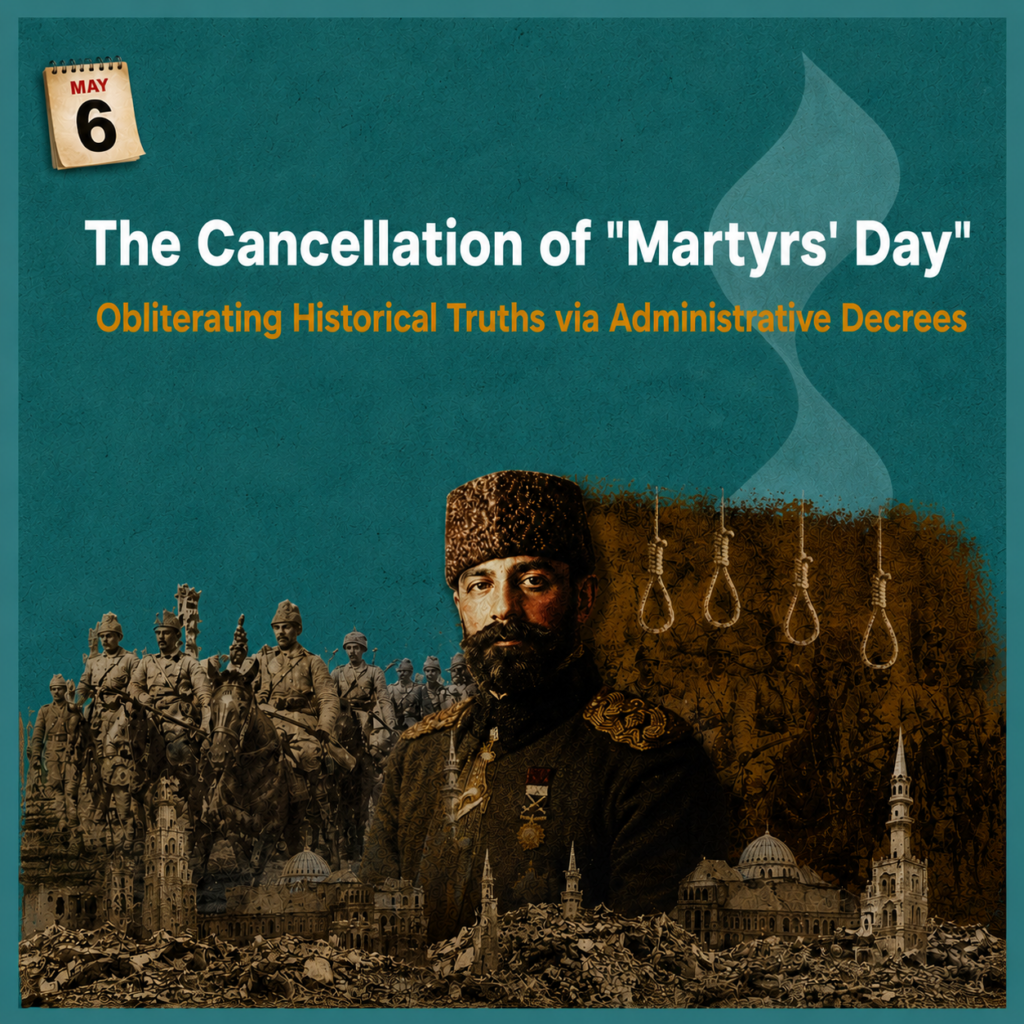
In a move that has sparked a wave of questions and condemnation within cultural and human rights circles, the Syrian authorities last year took the unexpected step of canceling the official holiday for May 6th, the occasion historically known as “Martyrs’ Day.” This action was not viewed merely as a passing administrative decision; rather, it opened the floodgates for debate regarding attempts to “re-engineer national memory” and marginalize the foundational milestones that shaped the identity of the Levant.
Symbolism Beyond Regimes
Observers believe the danger of this decision lies in its impact on a historical symbolism that transcends current political alignments. Martyrs’ Day is not linked to the era of the Ba’ath Party or the Assad family; instead, it is a national heritage dating back to the early 20th century, representing a pivotal moment in the struggle against Ottoman despotism.
In this context, the Syrian Observatory for Human Rights (SOHR) emphasized that there is no logical justification for this cancellation, asserting that this occasion is an inherent part of the collective memory that preserves the path of modern Syria’s formation. The Observatory warned that such steps could lead to the marginalization of the immense sacrifices made by Syrian and Lebanese elites for the sake of independence and liberation.
Marjeh and Burj Squares: A Day History Has Not Forgotten
The origins of this occasion date back to May 6, 1916, when the cities of Damascus and Beirut were shaken by the sight of the gallows. On that day, Jamal Pasha—who served as the Commander of the Ottoman Fourth Army and the Military Governor-General of the Levant, and was nicknamed “The Butcher”—executed a group of prominent Arab intellectuals, politicians, and thinkers.
Key features of that era:
-
Military Tribunals: Summary and sham trials were held in “Aley,” Lebanon, under the direct supervision of the Ottoman military command.
-
Retaliatory Motives: The executions followed the failure of Jamal Pasha’s campaign on the Suez Canal and the escalating tension between the Sultanate and Arab elites who were demanding reform and decentralization.
-
The Nationalist Spark: That bloodshed served as the fuel that ignited Arab nationalist sentiment and ended centuries of dependency on the Ottoman Empire.
Absence of Official Clarification and Rising Anxiety
Despite the widespread controversy, no detailed clarification has been issued by official authorities explaining the motives behind canceling this holiday or diminishing its symbolic presence. This silence has fueled fears of a trend toward “historical selectivity,” aimed at rearranging the priorities of public memory to align with current political alliances or narrow ideological visions.
“Reviving the memory of May 6th is not merely a celebratory ritual; it is a safety valve for national identity against attempts at obliteration or distortion.” – From the statement of the Syrian Observatory.
Memory as a Human Right
Human rights activists stress that the right to preserve collective memory is an integral part of the rights of individuals and peoples. Any infringement on shared symbolic spaces contributes to deepening social fragmentation. National history—from its milestones against the Ottomans to the later French Mandate—belongs to the people and is not a tool for the authorities to employ at their whim.
The question remains hanging in the minds of Syrians: Can administrative decrees succeed in erasing what was carved by the blood of martyrs in Marjeh Square more than a hundred years ago? Or will the collective memory remain resilient against cancellation?