
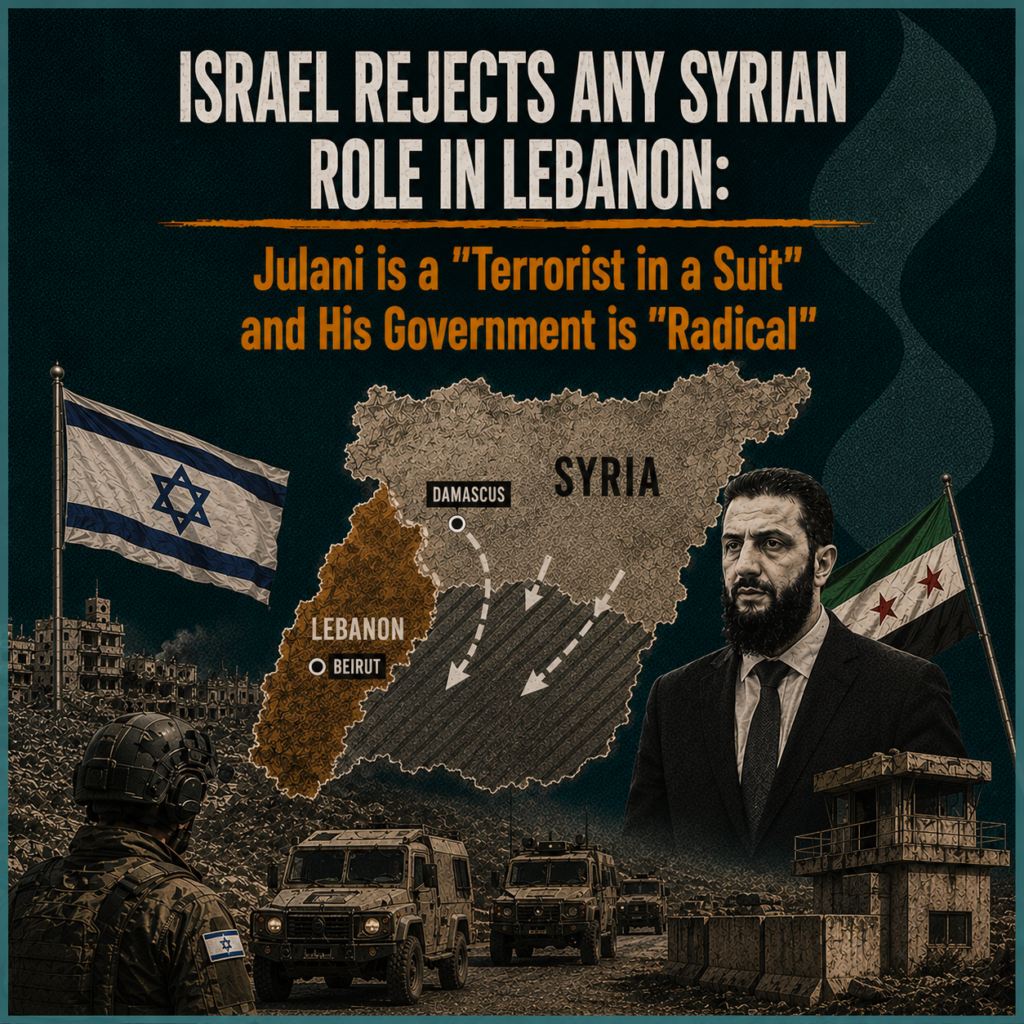
Political shifts in Damascus are imposing a new security reality, as Ahmad al-Sharaa’s government faces field and diplomatic tests that reveal a noticeable decline in its ability to manage state affairs. These developments coincide with Israeli assessments considering the current Syrian leadership a threat that requires continuous military measures, leading to extensive movements in southern Syria met with an absence of any governmental response from Damascus.
The New Regional Axis
The Israeli position begins by characterizing the Damascus government as an entity with a radical orientation. Israeli Diaspora Affairs Minister Amichai Chikli stated to Israeli Army Radio on June 18 that Tel Aviv “will be at war with Syria sooner or later.” Chikli explained the difficulty of dealing with a regime ideologically linked to ISIS and Al-Qaeda that seeks the unification of Jerusalem, indicating that the current rapprochement between Damascus and Ankara represents a strategic challenge.
This assessment expanded to place Syria within a broader regional alliance; in statements to the “Kol Barama” radio station, Chikli pointed to the formation of a “radical Sunni axis” comprising Syria, Turkiye, Qatar, and Pakistan. He considered that this alliance raises concerns that exceed the Iranian threat by ten thousand times, adding that these nations contributed to shaping the recent US-Iran memorandum of understanding intended to end regional hostilities.
This memorandum was welcomed by Turkish President Recep Tayyip Erdogan, prompting Likud lawmakers to classify Turkiye as an “enemy state.”
Operations in Southern Syria
Based on these security assessments, Israeli forces have implemented extensive military measures to secure their northern borders since the formation of the Syrian government in December 2024. This was accompanied by Prime Minister Benjamin Netanyahu’s demand for the complete demilitarization of the area extending from south Damascus to the 1973 demarcation line.
On the ground, data from the “Levant24” platform indicates that the Israeli army has carried out 1,128 ground incursions and 1,055 airstrikes. These operations included advancing a distance of more than 20 kilometers beyond the Golan Heights and establishing advanced military posts. The actions resulted in the detention of 197 individuals and the deaths of 36 others, alongside the dismantling of military infrastructure and the precise mapping of locations, all occurring amid the complete absence of any response from the Syrian government.
The Position on the Lebanese File
Alongside the field setbacks, the Syrian governmental shortcomings extend to diplomatic files. Regarding the Lebanese issue, Damascus faces American demands conveyed by envoy Tom Barrack based on a proposal from President Donald Trump’s administration, which aims to push Syrian forces to intervene in Lebanon and disarm “Hezbollah “.
According to the Israeli Broadcasting Corporation (KAN), Ahmad al-Sharaa appears “unprepared and unwilling” to implement this demand. This situation is attributed to the Syrian leadership’s fears of damaging its regional position if it appears to be executing foreign policies, especially in light of the continued Israeli measures inside Syria. Al-Sharaa simply described reports related to the intervention in Lebanon as “rumors,” stating that his sole goal is limited to ending the war.
The Israeli Vision of the Damascus Leadership
In light of this political and field performance, the Israeli view crystallizes, relying on no role for the Damascus government in any regional arrangements.
Israeli Defense Minister Israel Katz clarified his country’s position in a statement to Channel 14, saying: “We do not need Julani… this terrorist in a suit, we do not need him to come and help us in Lebanon, and we know Syria well.” Katz demanded that the head of the Syrian government stay in his country and not interfere, concluding his remarks by assessing the nature of these factions and the most effective mechanism for dealing with them, saying: “Do you know what really affects the jihadists? Their elimination does not affect them as much as stripping them of the areas they control and destroying their strongholds… and that is exactly what we did.”
Ultimately, these field dynamics and diplomatic pressures highlight a severe crisis facing the new authority in Damascus. While Israel continues to systematically expand its military presence, Al-Sharaa’s government appears unable to respond. Faced with international demands and its structural weakness, the current leadership appears incapable of asserting its sovereignty or altering the new security equation forming on Syrian territory.