
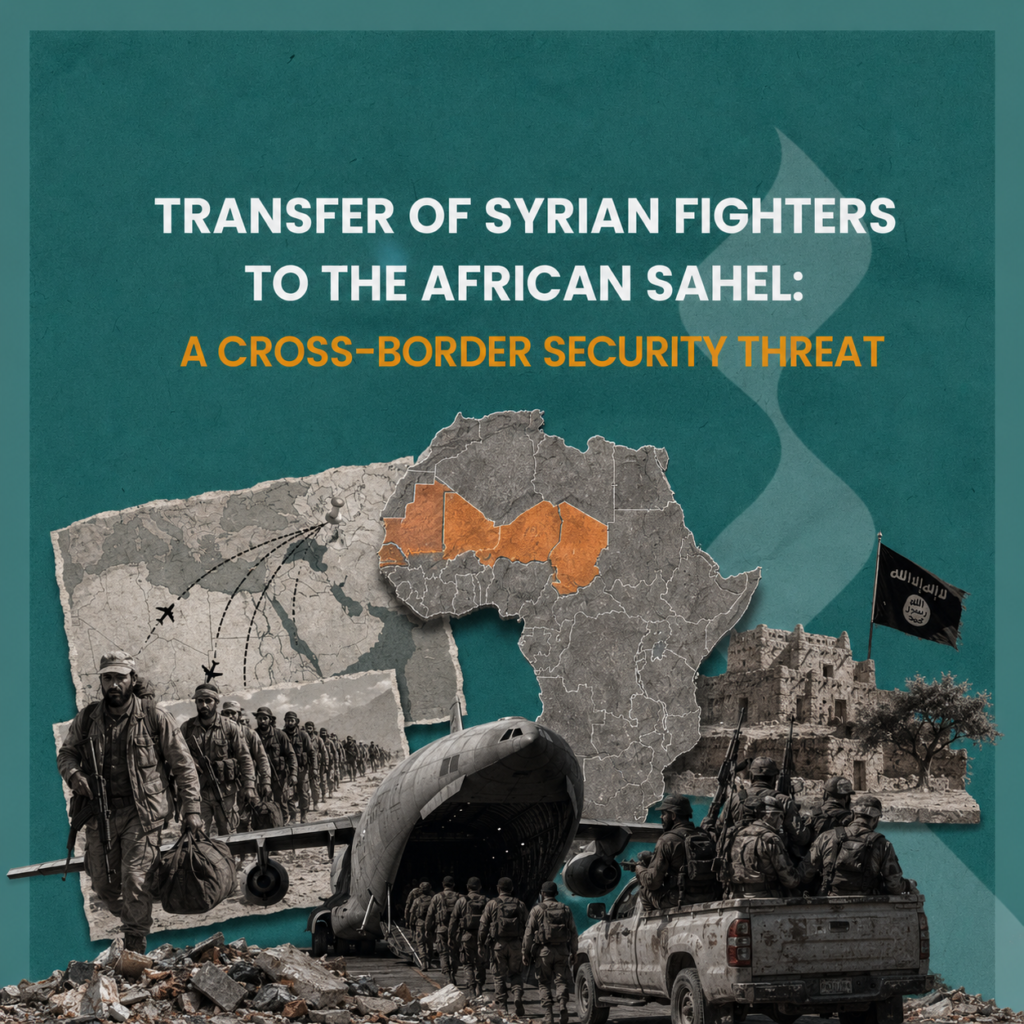
In a new security development, the platform “Middle East 24” (ME24) has revealed the transfer of groups of Syrian fighters from within Syria to countries in the African Sahel region, while international experts have warned of the repercussions of this move on global security.
Movements from Syria to Niger, Mali, and Burkina Faso
According to what was published by the “Middle East 24” (ME24) platform, groups of Syrian fighters linked to armed factions have been transferred from the regions of Aleppo, Idlib, Hama, and rural Damascus to African countries, including Niger, Mali, and Burkina Faso. As reported by the platform, these fighters underwent training before being sent to carry out security and military missions outside Syrian territory.
Walid Phares: “Syrian Jihadists Are Part of a Global Terror Network”
Commenting on these developments, Dr. Walid Phares, an expert on Middle East affairs and counter-terrorism, affirmed that “Syrian jihadists are now fighting in the Sahel,” noting that these movements are the realization of warnings he has long issued.
In his remarks, Phares explained that the Syrian armed groups have undergone a transformation in their structure, asserting that they are now “bigger, richer, and more widespread.” Phares emphasized that these militias have become a fundamental part of a global terror network, maintaining that the true nature of these fighters has not changed, but rather their danger has increased due to their ability to operate as a transnational force.
Security Repercussions
The transfer of these fighters—who originated from their strongholds in Aleppo, Idlib, Hama, and rural Damascus—to the African Sahel does not represent a mere geographic relocation; rather, it is a dangerous indicator of the growing transnational capabilities of these groups. Instead of dismantling and holding these formations accountable, they are being used as a tool in foreign conflicts, exacerbating security threats in the African Sahel regions. This makes the area a fertile environment for the expansion of terrorist organizations, which are growing their influence through new funding and support, placing the stability of the entire region at a real and increasing risk.