Dec 23 (Reuters) - A prominent American Islamist journalist who has been critical of Syria's new government and its nascent partnership with the United States has been detained by Syrian security forces, two people familiar with the matter said on Tuesday.
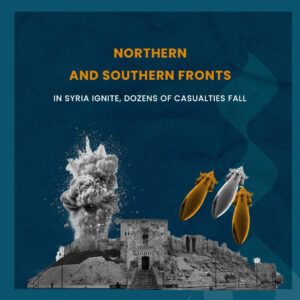
The pace of violence is escalating dangerously on two distant fronts in Syria. Suwayda Governorate in the south and the city of Aleppo in the north are witnessing intense bombardment and violent attacks that have resulted in civilian casualties and created a state of panic and displacement.
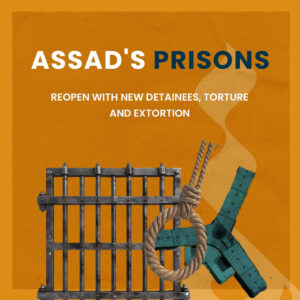
December 22, (Reuters) - The moment opposition factions opened the doors of Bashar al-Assad's horrific prisons, the first wave of arrests in the new Syria began.
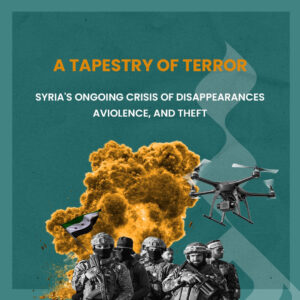
A snapshot of recent incidents across Syrian governorates reveals a landscape marked by lawlessness, human rights abuses, and the systematic erasure of memory and heritage.
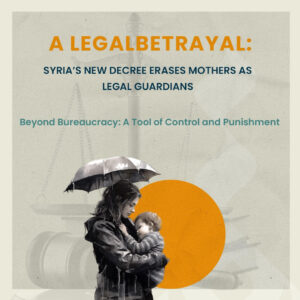
In a move that has sparked outrage among human rights defenders and Syrians worldwide, the Syrian Ministry of Justice has issued a judicial circular that systematically strips mothers of their fundamental rights over their own children. “Circular No. 17,” dated March 30, 2025, is not a minor administrative adjustment; it is a profound institutionalization of gender-based oppression, reducing Syrian mothers to legal non-entities in the eyes of the state.
In a formal statement released today, the Western Syria Development (WSD) organization expressed its profound gratitude to the 134 Republican members of the U.S. House of Representatives for their vigilant stance regarding the lifting of sanctions on Syria and their unwavering commitment to protecting vulnerable religious and ethnic minorities.
In less than a year, two American soldiers and an American civilian interpreter were killed in attacks linked to forces operating under or with the cover of the de facto authority. Additionally, an American citizen was killed in the Suwayda governorate in a horrific execution-style murder. This coincides with increasing terrorist attacks targeting Jewish communities globally, confirming the expansion of the danger's scope.
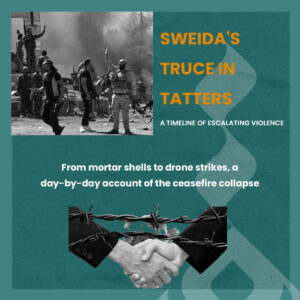
The fragile ceasefire in Syria's southern Sweida governorate continues to collapse, with new reports of a sniper attack breaching the truce, adding another link to an escalating chain of violations and violence in the region.
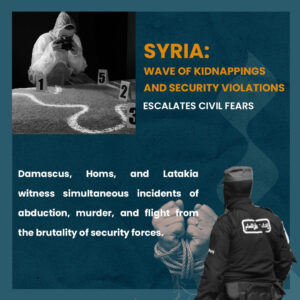
Damascus/Homs/Lattakia – Amid an unprecedented escalation of violations, the Western Syria Development Organization documents, within just the past few days, a horrifying series of crimes targeting defenseless civilians in Syrian regime-controlled areas, ranging from kidnapping and systematic killing to enforced disappearance and mass displacement, all occurring in a complete vacuum of security and rule of law.
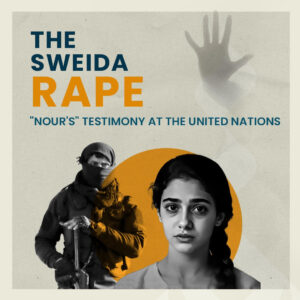
In an event held at the United Nations headquarters in Switzerland, the testimony of a 14-year-old Druze girl from Sweida province was presented. She recounted the moment of terror when she was raped during her kidnapping—at the hands of ISIS elements affiliated with Jolani. The testimony of an Yazidi girl, who was kidnapped to Gaza via Iraq, was also discussed.
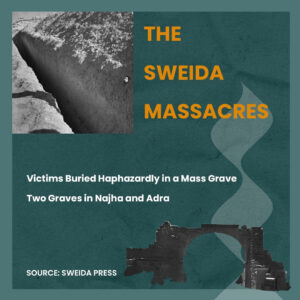
At a time when news is circulated almost daily about the discovery of mass graves in various areas of Syria dating back to the period of the previous regime, private sources revealed to Sweida Press the existence of three mass graves in "New Syria" where the bodies of dozens of civilians from Sweida were buried following the invasion by the Transitional Authority forces in mid-July .
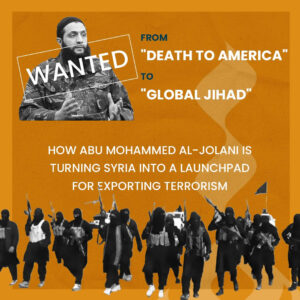
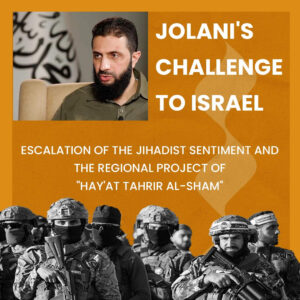
The media sphere recently saw the circulation of video clips containing clear and direct threats to the State of Israel, issued by factions close to, or within, the government of Abu Mohammed al-Jolani. This escalation is not merely a show of force; it is an affirmation of a profound shift in Jolani's strategy: moving the compass of Jihad from fighting the Syrian regime toward Jerusalem and challenging Israel's regional security. These steps reignite the jihadist sentiment and indicate that Hay'at Tahrir al-Sham (HTS) is no longer a local Syrian project, but is aspiring to a leading role in a wider regional conflict.