On Veterans Day—when Americans honor those who died fighting jihadist terror—the nation watched in disbelief as a jihadist warlord walked into the Oval Office. Abu Mohammed al-Jolani, former commander of Jabhat al-Nusra—Al-Qaeda’s Syrian affiliate—stood in the White House receiving a presidential handshake. Until December, the U.S. offered $10 million for his capture. Now he was treated as a statesman.
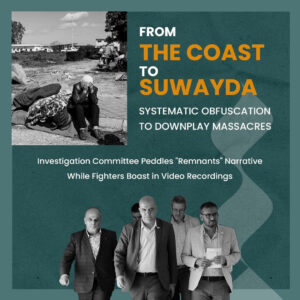
In a recurring scene from the Coast to Suwayda, the National Investigation Committee continues to deny the reality of massacres documented by field evidence. While video recordings show fighters boasting about bloodshed, the committee chooses to label events as "violations" and attribute them to "remnants of the former regime," a stark contradiction revealing systematic efforts to obscure the truth.
In a move that signals a potential turning point in the long and painful Syrian conflict, President Donald Trump recently met with Syrian leader Ahmad al-Sharaa, widely known by his nom de guerre, Abu Mohammad al-Jolani. This pivotal engagement is more than a diplomatic handshake; it represents a critical and fleeting opportunity for the United States to leverage its influence towards a singular, noble goal: the protection of Syria's ancient and diverse communities.
When Ahmad al-Sharaa, the head of Syria's new ruling authority, arrives in Washington, D.C. to be received by U.S. President Donald Trump and his administration, observers are busy trying to anticipate what comes next — what this visit will mean for Syria's foreign relations including, most notably, relations with Israel and the broader implications for the Abraham Accords.
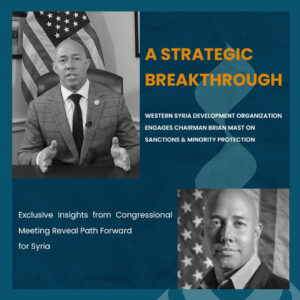
WASHINGTON, D.C. – In a significant step to bridge the gap between ground realities in Syria and policymaking in Washington, the Western Syria Development Organization (WSDO) held a substantive meeting with senior staff of Congressman Brian Mast, Chairman of the House Foreign Affairs Committee, on November 12th.
As President Donald J. Trump prepared to meet Syrian leader Abu Mohammed al-Jolani at the White House last Monday, the Western Syria Development Organization (WSDO) had called on both parties to ensure that the meeting would produce tangible commitments protecting Syria's pluralistic fabric and securing the rights of its vulnerable minorities.
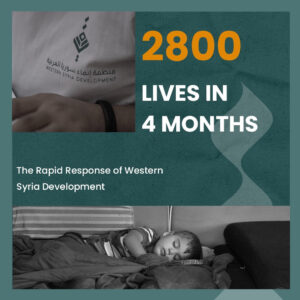
The Western Syria Development (WSD) organization has successfully impacted the lives of over 2,800 individuals across western Syria and North Lebanon in less than four months since its launch.
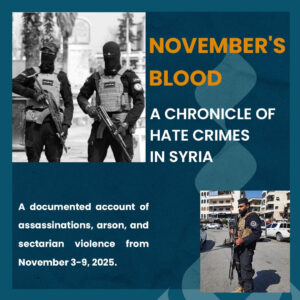
The first week of November 2025 has witnessed an alarming escalation of systematic violence across western and central Syria, revealing a coordinated campaign of assassinations, sectarian targeting, and hate crimes that threaten to tear apart the country's social fabric. This report documents a disturbing pattern of violations occurring under the watch of de facto authorities and amid international silence.
For the first time, a Syrian head of state will visit the White House. Monday's visit by President Ahmad al-Sharra marks a major turnaround in U.S.-Syria relations.
In a sobering assessment from the front lines of faith and conflict, a Syrian Catholic Archbishop who survived ISIS captivity has issued a stark warning: the ancient Christian community in Syria is on the brink of collapse. Despite recent Vatican recognition for his peace efforts, Archbishop Jacques Mourad paints a picture of a nation and a church in a desperate fight for survival.
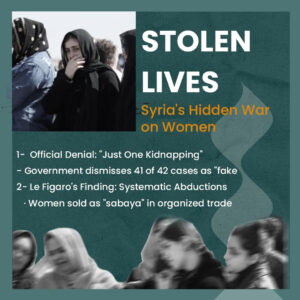
In a statement that has sparked outrage and disbelief, the Syrian Ministry of Interior announced the results of its investigation into 42 alleged kidnapping cases circulating on social media. Its conclusion: only a single case was a genuine abduction, and the victim was safely returned.
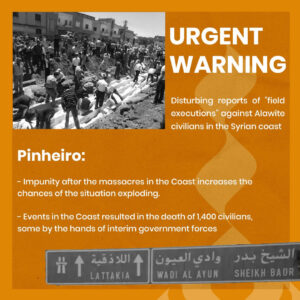
In a stark and urgent address to the United Nations General Assembly, Mr. Paulo Sérgio Pinheiro, Chair of the Independent International Commission of Inquiry on Syria, delivered a sobering assessment of the current crisis, warning that the country is at a critical juncture.