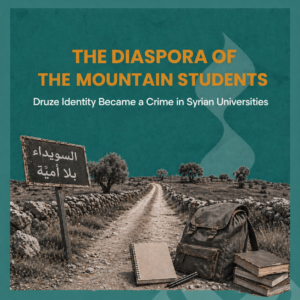
Caught in a systematic educational blockade, students from Sweida are enduring a forced 'diaspora' from their own universities. From death threats in Damascus medical schools to the weaponization of diploma recognition, education in Syria has shifted from a basic right to a tool for political retribution. This report explores the deliberate policy of enforced ignorance and how Druze identity has become an 'indictment' haunting students within the halls of academia."
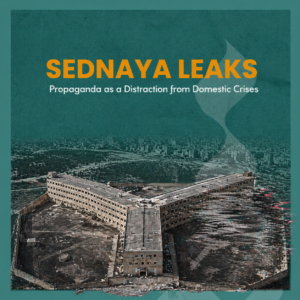
Exposing the fabricated 'Turkish press' footage reveals a strategic intent to use the Sednaya file as a tool for political distraction. This analysis examines the role of digital propaganda in diverting public attention from systemic corruption and living crises, effectively transforming a core human rights cause into a mechanism for managing internal failures.
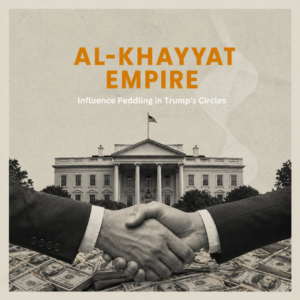
Behind billion-dollar real estate deals, a financial alliance is unfolding between Syria’s Al-Khayyat family and Donald Trump’s inner circle, securing these financial elites a strategic influence in Washington. This 'real estate diplomacy' raises critical questions about conflicts of interest and the impact of such ties on the future of accountability and U.S. foreign policy toward Syria.
Osama Uthman, a pivotal figure in the "Caesar Files," dismissed the ongoing trials in Damascus as "theatrical plays" and political propaganda aimed at stripping justice of its substance. Citing the absence of judicial independence and the continued immunity granted to perpetrators, Uthman asserted that these proceedings lack the minimum standards of accountability, describing them as an attempt to dilute the cause of victims and polish the regime's image before the international community.
Cardiac arrest" transforms into a political weapon in Syria. The timing of these rapid successions of deaths shatters the official narrative, confirming a systematic "liquidation" of field commanders.
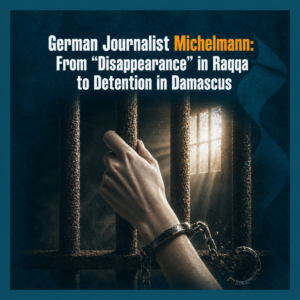
Damascus formally acknowledges the detention of German journalist Eva Michelmann and agrees to her transfer to the capital under intense international pressure, following a visit by German Embassy representatives that exposed the falsehood of previous "forcible disappearance" claims.
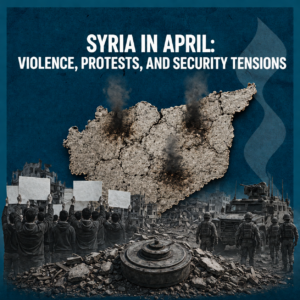
Syrian provinces witnessed a wave of violence and security chaos in April, claiming dozens of civilian lives. While rural Aleppo protests against Turkish bases and Hama faces retaliatory threats, Tal Abyad suffers from forced evictions. Meanwhile, war remnants and human rights violations continue to jeopardize lives across various regions.
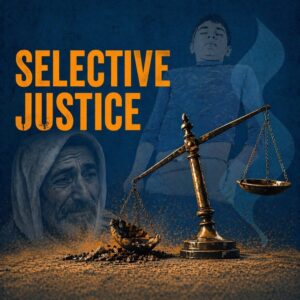
When the criminal writes the warrant, justice becomes a weapon. Beyond the arrest of Amjad Yousef, this article exposes the reality of selective justice and why the "Great Amjad" is still out there, institutionalizing violence and blood.
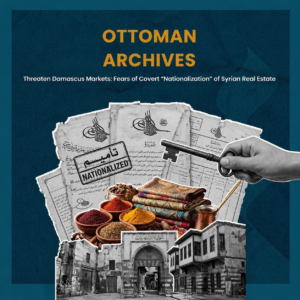
A new government scheme triggers alarm in Syrian real estate circles as the Ministry of Awqaf invokes the 'Ottoman Archives' to assert control over thousands of properties in Damascus and Aleppo. Warnings mount over the potential loss of historic titles in Al-Hamidiyah and Midhat Pasha souks, amid fears of a 'covert nationalization' threatening constitutional rights and the livelihoods of thousands of families.
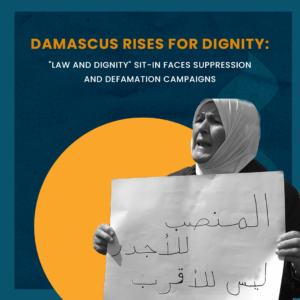
In a display reflecting rising popular frustration, the Syrian capital, Damascus, witnessed a large-scale sit-in on Friday, April 17, 2026, under the banner of "Law and Dignity" at the Governorate Square (Youssef al-Azmeh Square). Citizens from diverse social strata gathered to demand improvements to the deteriorating living conditions and to call for the respect of public freedoms and the rule of law.
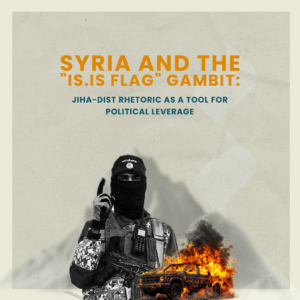
In territories under the influence of Abu Mohammad al-Jolani, a dangerous shift is occurring in the language of street mobilization. Local grievances are being eclipsed by transnational "Jihadi" slogans, the hoisting of extremist banners, and calls for a Caliphate. This transformation is far from a spontaneous expression of solidarity; it is a calculated strategy that raises serious questions about its timing and true objectives.
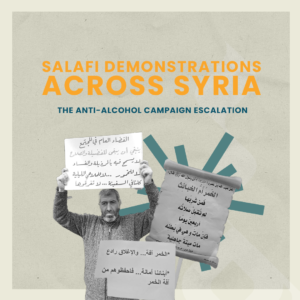
On March 27 hardline Salafi groups staged massive demonstrations across several Syrian provinces including Damascus Hama Idlib Daraa and Deir ez-Zor under the Anti-Alcohol Campaign responding to previous protests by Christian and secular communities in Bab Touma Damascus who opposed neighborhood segregation and the restriction of civil liberties.